

Hire Embedded Systems Developer 
Top Talent. Zero Hassle.
Skip the sourcing grind. Get 3 to 4 hand-picked developers to
interview within 48 hours, and have the right one start within a week.
Flexible hours with real overlap in your time zone.
Top 1.5%
98%
< 24 hours
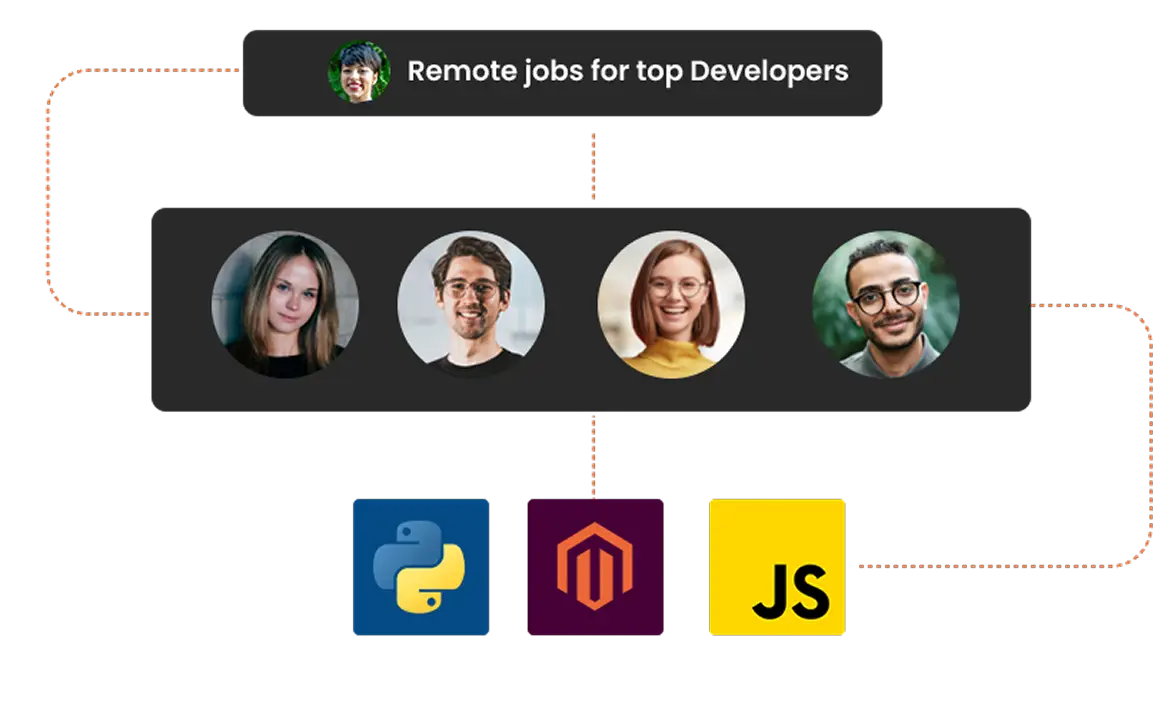
Hire remote Embedded Systems Developer



- Microcontrollers
- Terraform
- C
Hiring Lucy is like unlocking a rare achievement in the dev world, full-stack fluency, emotional int...
Experience
14 years
Availability
Full-Time only


- Python
- C++
- C
Sagar brings the kind of engineering focus that transforms friction into flow. He don’t cut corners,...
Experience
14 years
Availability
Full-Time only

- Microcontrollers
- C++
- Ethereum
With Felix on the team, deadlines stop being scary. He bring calm energy, deep technical insight, an...
Experience
10 years
Availability
Full-Time only

- Microcontrollers
- C
- MongoDB
With Anchal on the team, deadlines stop being scary. She bring calm energy, deep technical insight, ...
Experience
15 years
Availability
Full-Time only

- C++
- C
- RTOS
Kartik doesn’t just show up to build—he come to elevate. Whether it’s sprint planning, debugging, or...
Experience
10 years
Availability
Full-Time only

- WordPress
- Microcontrollers
- C
Picture Vishal as a systems whisperer—translating abstract requirements into scalable modules and qu...
Experience
15 years
Availability
Full-Time only

- Python
- C
- RTOS
Hudson is the kind of developer who doesn't just ship code but engineers clarity, balance, and momen...
Experience
11 years
Availability
Full-Time only
- Microcontrollers
- Terraform
- C
Hiring Lucy is like unlocking a rare achievement in the dev world, full-stack fluency, emotional int...
Experience
14 years
Availability
Full-Time only
Our engineers come from teams at:

Testimonials

Samantha R.
CTO at Finedge
We needed skilled developers fast, and they absolutely delivered. Within a week, we had a full team onboard and coding. Great communication, smooth process, and top-tier talent, couldn't ask for more.
David M.
Head of Product at NovaTech
ncredible experience. Our project deadlines were tight, and the developers we hired ramped up instantly. It's rare to find this level of technical skill and professionalism together.
Priya K.
VP Engineering at BrightPath
The hiring process was seamless. We interviewed three developers and hired two, and both exceeded expectations from day one. Highly recommend for anyone tired of endless sourcing.
Mark L.
CEO at ZenCloud Solutions
Exceptional talent and a no-hassle process. It felt like we added full-time employees without the hiring overhead. Truly one of the best decisions we made for scaling our tech team.
View more testimonials
4-stage technical screening
before reaching you.
who fit, not just who look
good on paper.

Role guide
What an Embedded Systems Developer does
If you want to hire embedded systems developers, start by being clear about what runs on the device and what happens when it fails. Embedded work sits between hardware and software: firmware that boots a board, drives sensors, talks over buses and radios, and keeps running for years without a login prompt.
The role is different from general backend or application work. Memory is measured in kilobytes, timing is deterministic, and a bug may mean a recall rather than a rollback. Good embedded engineers read datasheets, use oscilloscopes and logic analyzers, and write C or C++ that is defensible under review.
Dev-Hire places remote embedded engineers who work your hours with a stated daily overlap. This page covers responsibilities, stack, seniority, interview questions and cost so you can decide whether a remote hire fits your hardware program. Bring-up sessions and lab debugging are the main constraint, so we cover how to handle them.
Responsibilities
- Write and maintain firmware in C and C++ for microcontrollers and SoCs, including drivers for sensors, displays, storage and communication peripherals.
- Bring up new boards with hardware engineers, reading schematics and datasheets, and debugging with oscilloscopes, logic analyzers and JTAG or SWD probes.
- Build on an RTOS such as FreeRTOS or Zephyr, designing tasks, interrupts and synchronization so timing deadlines hold under load.
- Implement communication stacks such as SPI, I2C, UART, CAN, USB and BLE, and validate them against real devices and protocol analyzers.
- Optimize for memory, power and boot time, profiling flash and RAM use and tuning sleep modes to meet battery and cost targets.
- Own the build, test and release path: bootloaders, secure over-the-air updates, hardware-in-the-loop tests and CI that flashes real boards.
What to look for in an embedded developer
Start with fundamentals, not a list of chips. A strong embedded developer can explain what happens from reset vector to main, how interrupts and the stack interact, and why a volatile qualifier matters. Ask them to describe a bug they traced to hardware, a timing issue or a race condition, and how they proved the cause. Tool habits matter as much as language skill.
Look for evidence in these areas:
- Shipped products, not only prototypes, with a clear account of what they owned.
- Comfort reading schematics and datasheets, and talking to hardware engineers without translation.
- Disciplined C and C++: bounded memory use, no casual heap allocation, and awareness of undefined behavior.
- Real debugging practice with a debugger, logic analyzer or oscilloscope rather than print statements alone.
- Testing habits, including unit tests on host and tests on actual boards.
Match the candidate to your platform. Bare-metal microcontroller work, an RTOS product and embedded Linux are related but different jobs. A great Linux engineer is not automatically a good Cortex-M engineer. Be specific about your MCU family, protocols and certification needs when you brief us, so the shortlist reflects them.
When to hire this role
Hire an embedded developer when software has to run on hardware you control and nobody on the team can own that boundary. Common triggers are a first hardware product moving from evaluation boards to a custom PCB, a prototype that works on the bench but fails in the field, or a vendor SDK that your team is patching without understanding.
Timing matters. Firmware effort is front loaded around bring-up and back loaded around certification, manufacturing test and field updates. Many teams hire too late, after a board spin has already been paid for with the wrong pin assignments or too little flash. Involving a firmware engineer during schematic review is cheap insurance.
Consider the shape of the work:
- One engineer fits a defined subsystem, such as a sensor driver set or a bootloader.
- A dedicated team of 2 to 10 engineers fits a product with firmware, tooling and test automation tracks.
- A scoped project fits a fixed deliverable, such as porting firmware to a new MCU.
Live supply for this role currently shows 7 published engineers, with all-inclusive monthly rates from $3,340 to $8,800. Use the Dev-Hire pricing calculator to model your own embedded systems developer cost before you commit.
How a remote embedded engineer works with your team
A remote embedded systems developer works your hours with a stated daily overlap, so standups, design reviews and code review happen live. The real constraint is not time zones but physical hardware. Someone has to hold the board.
Plan for hardware access early. Options that work well:
- Ship development boards and debug probes to the engineer, with spares of the same revision.
- Keep a shared lab board at your office connected to a remote flashing and serial console setup.
- Use hardware-in-the-loop CI so every merge is tested on real devices without anyone being present.
- Reserve overlap hours for joint bring-up sessions when your hardware engineer is at the bench.
Equipment is included in the all-inclusive monthly rate; agree early who supplies your target boards and any specialized instruments.
Write down interfaces: pin maps, register-level assumptions, protocol specs and timing budgets. Embedded bugs hide in unwritten assumptions between hardware and firmware teams, and remote work forces that discipline. Keep a short bring-up log in the repository so decisions survive handoffs.
Start with one engineer on a contained task. If you later need more, Dev-Hire offers dedicated teams and managed teams with a Dev-Hire delivery lead. Month to month terms keep the commitment low while you learn what works.
Use cases
What teams hire Embedded Systems Developers for
Firmware for a new connected device
Take a product from evaluation board to custom PCB with drivers, power management, wireless connectivity and a bootloader that supports safe updates.
Rescuing unstable field firmware
Diagnose watchdog resets, memory corruption and timing faults in shipped devices, then add logging, tests and a reliable update path.
Porting to a new microcontroller
Move an existing codebase to a different MCU family because of cost or supply, rebuilding the hardware abstraction layer and revalidating behavior.
Industrial and sensor integration
Implement CAN, Modbus or SPI interfaces for sensors and actuators, with deterministic timing and fault handling for equipment that runs continuously.
Embedded Linux platform work
Build custom Linux images, kernel drivers and update mechanisms for gateways, displays and other devices on capable SoCs.
Well-known products built this way
FreeRTOS
A widely used real-time operating system kernel for microcontrollers, written in C and used as the base for embedded firmware.
Source: FreeRTOSZephyr Project
An open source RTOS built in C for resource-constrained devices, with a large ecosystem of supported boards and protocols.
Source: Zephyr ProjectRaspberry Pi Pico
A microcontroller board programmed with a C and C++ SDK, widely used for firmware development and prototyping.
Source: Raspberry Pi PicoGarmin wearables
Fitness and GPS devices built on embedded firmware that manages sensors, power use and wireless connectivity.
Source: Garmin wearablesSonos speakers
Connected audio products built with embedded software running on dedicated hardware with networking and over-the-air updates.
Source: Sonos speakers
Vetting
How we vet Embedded Systems Developers
Every engineer goes through three steps before they are published. First is a profile review, where we check experience against what the role needs, including shipped products and the platforms they have worked on. Second is a communication check, because remote firmware work depends on clear written interface notes, honest status updates and the ability to explain a hardware problem to a software teammate. Third is a technical interview run by a senior engineer, who tests depth rather than keywords.
Only the top 1.5% of applicants are accepted.
For embedded roles, the strongest signal is how a candidate reasons about the boundary between hardware and software, so expect that to matter in the technical conversation. It also helps to run your own short session on your specific platform before you start. Describe your MCU family, protocols and test setup in the brief, and the shortlist will reflect it.
If an engineer is not the right fit once work begins, replacement is free and included in the all-inclusive monthly rate. Terms are month to month, so you are not locked in while you check the fit.
Why Dev-Hire
Dev-Hire is a hiring platform for vetted remote engineers. Engineers work your hours with a stated daily overlap, so your firmware reviews and bring-up sessions happen during your day.
Pricing is one all-inclusive monthly rate per engineer, month to month, with no placement fees. The rate covers the engineer, payroll, benefits, equipment, free replacement and our fee, with no setup fees. Typical full-time rates are $2,500 to $3,700 per month for mid-level, $3,500 to $4,900 for senior and $4,900 to $6,900 for lead or architect, and part time is half. Right now 7 engineers are published in this role, with all-inclusive monthly rates from $3,340 to $8,800.
Speed matters when a board spin or launch date is fixed. You get a shortlist in 48 hours and can start within a week.
On track record, Dev-Hire engineers have delivered 1.8M+ hours, with 95% client retention and a 4.8/5 average client rating.
You can hire one engineer, a dedicated team of 2 to 10, a managed team with a Dev-Hire delivery lead, or a scoped software project.
Interviewing
Embedded Systems Developer interview questions
Questions our senior engineers use, and what a strong answer covers.
Walk me through what happens from power-on to the first line of main on a microcontroller you know well.
Covers reset vector, stack pointer setup, clock and memory initialization, copying data and zeroing bss, startup code, and the handoff to main. Names the specific chip and mentions the linker script.
How do you share data safely between an interrupt handler and a task?
Keeps ISRs short, uses volatile correctly, atomic access, queues or ring buffers, and critical sections only when needed. Mentions priority inversion and avoiding blocking calls in interrupt context.
Describe a bug you traced to hardware or timing. How did you prove the cause?
Gives a concrete case, with a hypothesis, measurements using a scope or logic analyzer, isolation steps and a verified fix. Shows patience and method, not guesswork.
How would you design a safe over-the-air update for a device in the field?
Covers dual image or rollback, signature verification, power-loss safety, version checks, staged rollout and a recovery path. Mentions testing failure cases, not just the happy path.
How do you keep memory and power use under control on a constrained device?
Discusses map file analysis, static allocation, stack sizing, avoiding the heap, sleep modes, peripheral clock gating and measuring current. Uses measurement before optimizing.
How do you test firmware when the hardware is not on your desk?
Describes host-side unit tests with hardware abstraction, simulators or emulators, and hardware-in-the-loop CI with remote flashing. Acknowledges what simulation cannot catch.
When would you choose bare metal, an RTOS or embedded Linux for a new product?
Weighs real-time needs, complexity, memory, cost, power, security and team skills. Gives examples of each and avoids one-size-fits-all answers.
How to hire Embedded Systems Developer
through DevHire

Submit a
free requestTell us what you're looking for: explore pre-vetted developers ready to interview.

Share your
project needsHop on a quick call to align on skills, timelines, and get a tailored estimate.

Meet top
candidatesReview 3 to 4 hand-picked developers within 48 hours, then interview and assess fit.

Hire and
onboard easilyWe handle contracts, payments, and admin, so you focus on scaling your team with confidence.
FAQ about hiring Embedded Systems Developer
How much does it cost to hire an embedded systems developer through Dev-Hire?
Typical full-time all-inclusive monthly rates are $2,500 to $3,700 for mid-level, $3,500 to $4,900 for senior and $4,900 to $6,900 for lead or architect. Part time is half. Currently published engineers in this role range from $3,340 to $8,800 per month, all-inclusive.
What does the monthly rate include?
One all-inclusive rate covers the engineer, payroll, benefits, equipment, free replacement and our fee. There are no setup or placement fees, and terms are month to month.
Can a remote embedded engineer work without physical access to our hardware?
Yes, with planning. Ship boards and debug probes to the engineer, set up a remote lab board or hardware-in-the-loop CI, and schedule overlap hours for joint bring-up. Agree who supplies target boards and specialized instruments early.
What time zone overlap can we expect?
Engineers work your hours with a stated daily overlap. Ask for the specific overlap on your shortlist so you can plan standups, reviews and lab sessions.
How fast can we start?
You get a shortlist in 48 hours and can start within a week.
How are embedded engineers vetted?
Each goes through a profile review, a communication check and a technical interview by a senior engineer. Only the top 1.5% of applicants are accepted.
Can we hire more than one engineer or a whole team?
Yes. You can hire one engineer, a dedicated team of 2 to 10 engineers, a managed team with a Dev-Hire delivery lead, or a scoped software project.
What if the engineer is not the right fit?
Free replacement is included in the all-inclusive monthly rate, and terms are month to month, so you are not locked in.
What we do for you


Rigorous Talent
ScreeningWe handpick developers who excel in coding, communication, and collaboration. Only the best move forward.

Tailored Team
BuildingWe don’t rely on algorithms. Every match is human-curated based on your goals and culture.

Seamless Setup
& AdminWe handle contracts, compliance, onboarding, and payments, so you stay focused on results.

Reliable Project
BackupDedicated success managers, free replacements, and proactive solutions whenever you need backup.
Embedded Systems Developer is not the best fit?
Hire developers by role

Full-stack Developer 
Front-end Developer 
Back-end Developer 
Mobile Developer 
DevOps Engineer 
Data Scientist 
ML Engineer 
AI Developer 
Cloud Engineer 
Data Engineer 
QA Engineer 
UI/UX Developer 
Blockchain Developer 
Data Analyst 
Software Architect 
Cyber Security Engineer 
Game Developer Looking for other role?
Hire developers by skill

JavaScript 
React 
Python 
Node.js 
Swift 
Kotlin 
AWS 
Docker 
Kubernetes 
TypeScript 
Golang 
Django 
Ruby on Rails 
C# 
.NET 
PostgreSQL 
Vue.js 
PHP 
MySQL 
Microsoft SQL 
Azure 
Java 
Angular 
Linux 
CSS3 
HTML5 
Terraform 
Jenkins 
Redux 
MongoDB 
GraphQL 
Spring Boot 
Flutter 
Redis 
Jest 
Solidity 
Firebase 
FastAPI 
Ruby 
Apache Kafka 
TensorFlow 
Next.js 
Rust 
Xamarin 
Ionic 
Drupal 
Unity 
Unreal Engine 
Logstash 
Elasticsearch 
Kibana 
Svelte 
Git Looking for other skill?

The Fast Lane to Tech Talent
Pre-vetted developers, handpicked for your stack and goals.