

Hire UI/UX Developer 
Top Talent. Zero Hassle.
Skip the sourcing grind. Get 3 to 4 hand-picked developers to
interview within 48 hours, and have the right one start within a week.
Flexible hours with real overlap in your time zone.
Top 1.5%
98%
< 24 hours
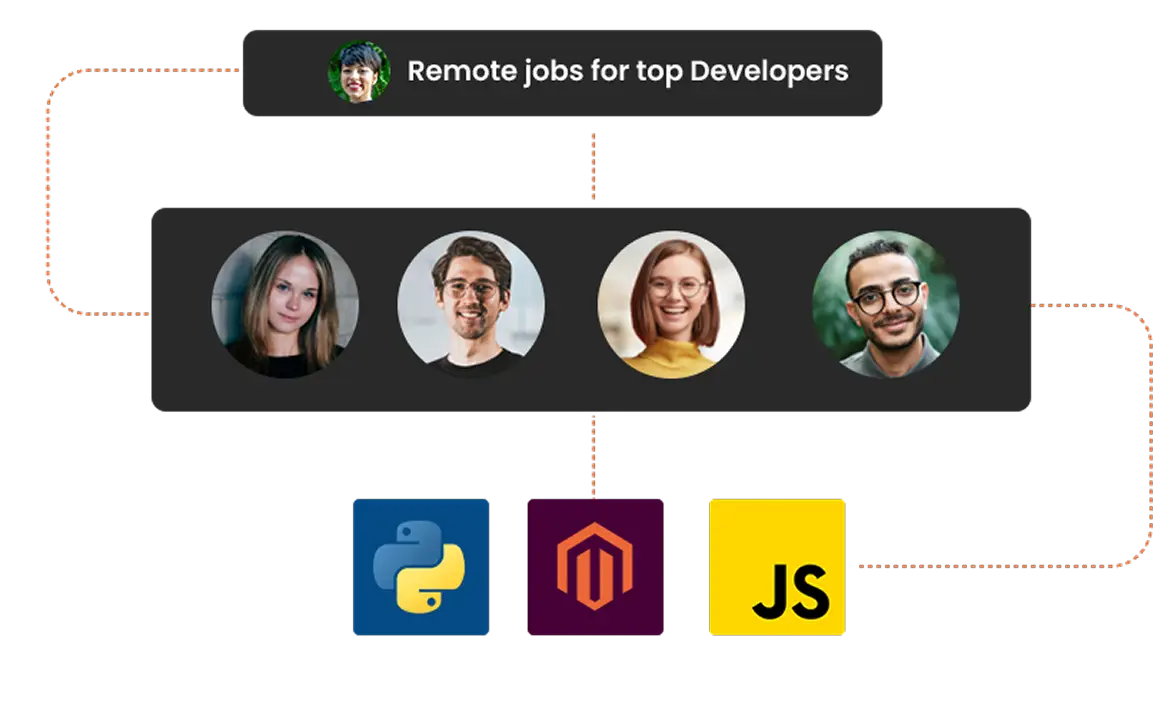
Hire remote UI/UX Developer



- React
- Framer
- Framer Motion
Abhik writes code with the precision of an architect and the flair of an artist. From backend logic ...
Experience
11 years
Availability
Full-Time only


- Tailwind CSS
- SvelteKit
- Figma
Hiring Henry is like unlocking a rare achievement in the dev world—full-stack fluency, emotional int...
Experience
10 years
Availability
Full-Time only

- GSAP
- Lottie
- Webflow
- JavaScript
Think of Kuldeep as your project's secret weapon, thoughtful, efficient, and fiercely committed to q...
Experience
15 years
Availability
Full-Time only

- React
- Tailwind CSS
- Figma
Dilip doesn’t just show up to build—he come to elevate. Whether it’s sprint planning, debugging, or ...
Experience
10 years
Availability
Full-Time only

- SCSS
- Material Design
- Angular
- Adobe XD
Deepali brings the kind of engineering focus that transforms friction into flow. She don’t cut corne...
Experience
12 years
Availability
Full-Time only

- CSS Modules
- Sketch
- Next.js
Think of Alankrit as your project's secret weapon, thoughtful, efficient, and fiercely committed to ...
Experience
14 years
Availability
Full-Time only

- UnoCSS
- Vue 3
- Vuetify
- Figma
Hiring Bhagwat is like unlocking a rare achievement in the dev world, full-stack fluency, emotional ...
Experience
12 years
Availability
Full-Time only
- React
- Framer
- Framer Motion
Abhik writes code with the precision of an architect and the flair of an artist. From backend logic ...
Experience
11 years
Availability
Full-Time only
Our engineers come from teams at:

Testimonials

Samantha R.
CTO at Finedge
We needed skilled developers fast, and they absolutely delivered. Within a week, we had a full team onboard and coding. Great communication, smooth process, and top-tier talent, couldn't ask for more.
David M.
Head of Product at NovaTech
ncredible experience. Our project deadlines were tight, and the developers we hired ramped up instantly. It's rare to find this level of technical skill and professionalism together.
Priya K.
VP Engineering at BrightPath
The hiring process was seamless. We interviewed three developers and hired two, and both exceeded expectations from day one. Highly recommend for anyone tired of endless sourcing.
Mark L.
CEO at ZenCloud Solutions
Exceptional talent and a no-hassle process. It felt like we added full-time employees without the hiring overhead. Truly one of the best decisions we made for scaling our tech team.
View more testimonials
4-stage technical screening
before reaching you.
who fit, not just who look
good on paper.

Role guide
What an UI/UX Developer does
If you plan to hire UI UX developers, you are looking for people who sit between design and engineering. They turn research and wireframes into interfaces that are accessible, responsive and consistent, then ship them in code. The best hires are fluent in both disciplines.
Typical work includes maintaining a visual system, turning Figma files into responsive components, running usability reviews and writing the interface copy that guides users through a flow. They own the details that make a product feel finished: spacing, states, error messages and accessibility. Strong candidates show their reasoning, not only polished screens.
Dev-Hire places remote UI UX developers who work your hours with a stated daily overlap. Right now 7 engineers are published in this role, with all-inclusive monthly rates from $2,640 to $8,450. You get one monthly rate, no placement fees, and a shortlist in 48 hours. That makes a remote UI UX developer a practical way to add design-aware front-end capacity.
Responsibilities
- Translate wireframes and Figma prototypes into production-ready, responsive interfaces that match the intended behavior across breakpoints, browsers and input types.
- Build and maintain a visual system of tokens, components and usage guidelines so product teams ship consistent screens without redesigning basics each sprint.
- Run lightweight usability reviews, analyze session feedback and turn findings into specific interface changes with clear reasoning for product owners.
- Write concise UX copy for buttons, empty states, errors and onboarding flows, and keep tone and terminology consistent across the product.
- Audit interfaces for accessibility, including contrast, keyboard navigation, focus order and screen reader labels, and fix issues before release.
- Review pull requests for visual and interaction fidelity, and hand off assets, specifications and edge cases clearly to backend and QA teammates.
What to look for in a candidate
Start with the portfolio, but read it as engineering evidence rather than a gallery. Strong candidates explain the problem, the constraints, the alternatives they rejected and what changed after launch. Look for shipped work in a real codebase, not only mockups.
Then check the craft in four areas:
- Responsive design: layouts that hold up on phones, tablets and wide monitors, with sensible breakpoints and fluid type and spacing.
- Visual systems: reusable tokens and components with documented states, rather than one-off screens.
- Accessibility: keyboard use, contrast, focus management and semantic markup treated as defaults.
- Writing: clear labels, error messages and empty states that a new user understands without help.
Finally, test the bridge between disciplines. Ask them to critique a screen from your own product and then describe how they would build the fix. People who can only do one half tend to create handoff friction. Also confirm they can work with Adobe Creative Suite for asset production and with Figma for collaboration, since many teams use both.
A short paid trial task, scoped to a few hours of review or a small component, tells you more than a long interview loop.
When to hire this role
Hire a UI UX developer when interface quality is limiting growth but you cannot justify a full design team plus a separate front-end squad. Typical triggers include:
- Your product works but feels inconsistent, because screens were built by different people at different times.
- Designers hand off files that engineers interpret differently, and review cycles keep repeating.
- Conversion, onboarding or activation flows underperform and nobody owns the fix.
- You are launching a new product or a redesign and need someone to turn a rough concept into a working interface quickly.
- Accessibility or mobile usability complaints are reaching support or sales.
This role is a poor fit when the real problem is backend performance, unclear product strategy or missing research. A UI UX developer improves what users see and touch; they cannot rescue a product nobody needs. If you need deep brand identity, illustration or motion production, pair them with a specialist.
Team size matters too. In a startup with two to five engineers, one senior hire can act as the design and front-end bridge. In a larger organization, a mid-level hire can speed up a design system backlog while your lead designer sets direction. Either way, give them a clear first project, such as auditing your top five screens, so the value shows within the first month.
How the role works with your team
Dev-Hire engineers work your hours with a stated daily overlap, which suits this role well when you set up the right rituals. Interface work is visual and conversational, so the overlap window matters more than total hours online.
Practical habits that work:
- Agree the overlap window up front and use it for design reviews, standups and live feedback on pull requests.
- Share Figma files, a component library and a written style guide so decisions do not depend on being in the same call.
- Use Storybook or a staging link for every change, so reviewers can see behavior without running the code locally.
- Write decisions down in the ticket: what changed, why, and what was rejected.
- Record short screen walkthroughs for work that lands outside the overlap, and answer with comments rather than waiting for a meeting.
Your developer should sit inside the product team, not in a separate design queue. They join sprint planning, see analytics and support feedback, and talk directly to product managers and backend engineers. Give them access to real users or at least recorded sessions when possible.
If you want more structure, a managed team with a Dev-Hire delivery lead can handle coordination, while a single engineer is enough for most smaller teams.
Use cases
What teams hire UI/UX Developers for
SaaS dashboard redesign
Rework dense data screens into clearer layouts with better hierarchy, filters and empty states, built as responsive components your engineers can maintain.
Design system build or cleanup
Consolidate duplicated styles into tokens and a documented component library so new features ship consistently and faster.
Onboarding and conversion flows
Redesign sign-up, activation and checkout steps, rewrite the interface copy and measure changes against your own analytics.
Accessibility remediation
Audit key journeys for contrast, keyboard and screen reader problems, then fix them in code and add checks to the review process.
Responsive web migration
Adapt a desktop-first product to work well on phones and tablets without maintaining a separate codebase.
Well-known products built this way
Polaris
Shopify's public design system for its admin, built as a React component library with documented visual and content guidelines.
Source: PolarisCarbon Design System
IBM's open source design system, with code components and design kits that support consistent, accessible product interfaces.
Source: Carbon Design SystemAtlassian Design System
A public system of components, tokens and content guidance used to keep products like Jira and Confluence visually consistent.
Source: Atlassian Design SystemPrimer
GitHub's design system, offering React components, styles and guidelines for building its web interface.
Source: PrimerMaterial Design
Google's design system and component libraries, a widely used reference for responsive, accessible interface patterns.
Source: Material Design
Vetting
How we vet UI/UX Developers
Every candidate goes through three steps before appearing on a shortlist. Only the top 1.5% of applicants are accepted.
- Profile review: we check experience, shipped work and portfolio evidence against the role.
- Communication check: we confirm the candidate can explain decisions clearly and communicate with colleagues, which matters for a role built around feedback.
- Technical interview: a senior engineer assesses the candidate's craft in depth.
For UI UX developers, that means the interview looks at responsive implementation, how they structure a visual system, accessibility habits and how they reason about usability trade-offs. You still decide who joins. We recommend a short conversation or a small review task with your own product so you can judge fit directly.
After you choose, you can start within a week, and the engagement stays month to month. If an engineer is not working out, replacement is free and included in the monthly rate.
Why Dev-Hire
Dev-Hire is a hiring platform for vetted remote engineers. Our engineers work your hours with a stated daily overlap, so your UI UX developer is in reviews and standups when your team is.
Pricing is one all-inclusive monthly rate per engineer, month to month, with no placement fees. The rate covers the engineer, payroll, benefits, equipment, free replacement and our fee. There are no setup or placement fees. Typical full-time all-inclusive monthly rates are $2,500 to $3,700 for mid-level, $3,500 to $4,900 for senior, and $4,900 to $6,900 for lead or architect. Part time is half. Across the 7 published engineers in this role, all-inclusive monthly rates currently run from $2,640 to $8,450.
You see a shortlist in 48 hours and can start within a week. You can add one engineer, a dedicated team of 2 to 10, a managed team with a Dev-Hire delivery lead, or a scoped software project.
Engineers have delivered 1.8M+ hours, with 95% client retention and a 4.8/5 average client rating.
Interviewing
UI/UX Developer interview questions
Questions our senior engineers use, and what a strong answer covers.
Walk me through a screen you shipped. What was the problem, what did you try and what did you reject?
Names a concrete user problem, constraints and at least one rejected option. Explains the tradeoff and what changed after release. Credits teammates honestly and can describe both the design reasoning and the code.
How would you make a data-heavy table work well on a phone?
Considers which columns matter, prioritizes content, and compares options such as stacked rows, horizontal scroll or detail views. Mentions touch targets, readable type and testing on real devices rather than only resizing a browser.
How do you structure a visual system so it stays consistent as the team grows?
Talks about tokens, a small set of documented components with states, naming, ownership and a contribution process. Mentions avoiding premature abstraction and keeping design files and code in sync.
A stakeholder wants a modal with five fields added to the checkout. How do you respond?
Asks about the goal, proposes alternatives and ties arguments to user impact. Suggests testing or measuring the change, stays collaborative, and can still implement the request well if the decision stands.
How do you check accessibility before release?
Combines automated tools with manual checks: keyboard-only use, focus order, contrast, semantic markup and screen reader labels. Treats accessibility as part of the build, not a late audit.
Rewrite this error message: Invalid input. What would you ask first?
Asks what went wrong and what the user can do next. Produces a short, specific, blame-free message that says how to fix it, and keeps tone consistent with the rest of the product.
How do you hand off work to a backend engineer or QA when you are outside the overlap window?
Describes written specs, linked designs, edge cases, a staging link and a short recorded walkthrough. Shows habits that reduce back-and-forth across time zones.
How to hire UI/UX Developer
through DevHire

Submit a
free requestTell us what you're looking for: explore pre-vetted developers ready to interview.

Share your
project needsHop on a quick call to align on skills, timelines, and get a tailored estimate.

Meet top
candidatesReview 3 to 4 hand-picked developers within 48 hours, then interview and assess fit.

Hire and
onboard easilyWe handle contracts, payments, and admin, so you focus on scaling your team with confidence.
FAQ about hiring UI/UX Developer
How much does it cost to hire a UI UX developer?
Dev-Hire uses one all-inclusive monthly rate per engineer. Typical full-time rates are $2,500 to $3,700 for mid-level, $3,500 to $4,900 for senior, and $4,900 to $6,900 for lead or architect. Part time is half. The rate covers the engineer, payroll, benefits, equipment, free replacement and our fee, with no placement fees. Use the cost calculator on the pricing page for an estimate.
What is the current range for UI UX developers on Dev-Hire?
There are 7 published engineers in this role, with all-inclusive monthly rates from $2,640 to $8,450. Where a candidate falls depends on seniority and scope. We confirm the monthly figure before you commit, and there are no setup or placement fees.
Can a remote UI UX developer work in my time zone?
Our engineers work your hours with a stated daily overlap. Agree the overlap window up front and use it for design reviews, standups and pull request feedback. Outside it, written specs and recorded walkthroughs keep work moving.
What is the difference between a UI UX developer and a UI UX designer?
A designer focuses on research, flows and visual design, usually in tools like Figma. A UI UX developer also builds the interface in code, so responsive behavior, accessibility and component quality are handled in one place. Many teams hire both, and the developer reduces handoff friction.
What UI UX developer interview questions should I ask?
Ask for a walkthrough of a shipped screen, how they would adapt a complex layout to mobile, how they keep a visual system consistent, how they test accessibility and how they would rewrite a poor error message. Look for reasoning and tradeoffs, not only polished visuals.
How quickly can I start?
You receive a shortlist in 48 hours and can start within a week. Engagements are month to month, so you can begin with one engineer and adjust as your needs change.
What happens if the engineer is not a good fit?
Free replacement is included in the all-inclusive monthly rate. There are no placement fees, and the arrangement is month to month, so changing course does not carry a penalty.
Can I hire more than one engineer or a whole team?
Yes. You can hire one engineer, a dedicated team of 2 to 10 engineers, a managed team with a Dev-Hire delivery lead, or a scoped software project. The team builder and project scoper pages help you plan each option.
What we do for you


Rigorous Talent
ScreeningWe handpick developers who excel in coding, communication, and collaboration. Only the best move forward.

Tailored Team
BuildingWe don’t rely on algorithms. Every match is human-curated based on your goals and culture.

Seamless Setup
& AdminWe handle contracts, compliance, onboarding, and payments, so you stay focused on results.

Reliable Project
BackupDedicated success managers, free replacements, and proactive solutions whenever you need backup.
UI/UX Developer is not the best fit?
Hire developers by role

Full-stack Developer 
Front-end Developer 
Back-end Developer 
Mobile Developer 
DevOps Engineer 
Data Scientist 
ML Engineer 
AI Developer 
Cloud Engineer 
Data Engineer 
QA Engineer 
UI/UX Developer 
Blockchain Developer 
Data Analyst 
Software Architect 
Cyber Security Engineer 
Game Developer Looking for other role?
Hire developers by skill

JavaScript 
React 
Python 
Node.js 
Swift 
Kotlin 
AWS 
Docker 
Kubernetes 
TypeScript 
Golang 
Django 
Ruby on Rails 
C# 
.NET 
PostgreSQL 
Vue.js 
PHP 
MySQL 
Microsoft SQL 
Azure 
Java 
Angular 
Linux 
CSS3 
HTML5 
Terraform 
Jenkins 
Redux 
MongoDB 
GraphQL 
Spring Boot 
Flutter 
Redis 
Jest 
Solidity 
Firebase 
FastAPI 
Ruby 
Apache Kafka 
TensorFlow 
Next.js 
Rust 
Xamarin 
Ionic 
Drupal 
Unity 
Unreal Engine 
Logstash 
Elasticsearch 
Kibana 
Svelte 
Git Looking for other skill?

The Fast Lane to Tech Talent
Pre-vetted developers, handpicked for your stack and goals.