

Hire Mobile Developer 
Top Talent. Zero Hassle.
Skip the sourcing grind. Get 3 to 4 hand-picked developers to
interview within 48 hours, and have the right one start within a week.
Flexible hours with real overlap in your time zone.
Top 1.5%
98%
< 24 hours
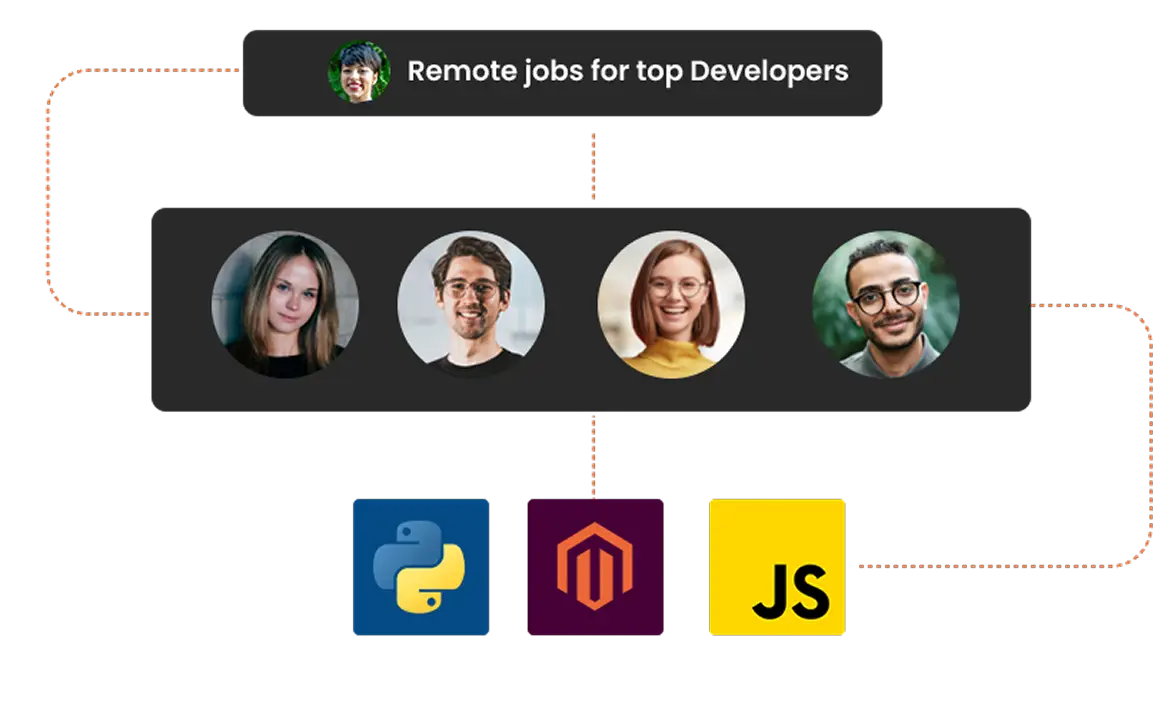
Hire remote Mobile Developer



- React
- Vue
- Capacitor.js
- Ionic
Rahul writes code with the precision of an architect and the flair of an artist. From backend logic ...
Experience
13 years
Availability
Full-Time only


- Xamarin
- .NET MAUI
- C#
Piper writes code with the precision of an architect and the flair of an artist. From backend logic ...
Experience
14 years
Availability
Full-Time only

- Vue
- Angular
- NativeScript
- Svelte
Hiring Aakash is like unlocking a rare achievement in the dev world—full-stack fluency, emotional in...
Experience
12 years
Availability
Full-Time only

- Jetpack Compose
- Android
- Kotlin
Paras brings the kind of engineering focus that transforms friction into flow. He don’t cut corners,...
Experience
15 years
Availability
Full-Time only

- Swift
- SwiftUI
- iOS
Anupama is the kind of developer who doesn't just ship code but engineers clarity, balance, and mome...
Experience
15 years
Availability
Full-Time only

- TypeScript
- React Native
- Expo
Raman doesn’t just show up to build—she come to elevate. Whether it’s sprint planning, debugging, or...
Experience
9 years
Availability
Full-Time only

- Flutter
- Dart
- Firebase
Zachary brings the kind of engineering focus that transforms friction into flow. He don’t cut corner...
Experience
14 years
Availability
Full-Time only
- React
- Vue
- Capacitor.js
- Ionic
Rahul writes code with the precision of an architect and the flair of an artist. From backend logic ...
Experience
13 years
Availability
Full-Time only
Our engineers come from teams at:

Testimonials

Samantha R.
CTO at Finedge
We needed skilled developers fast, and they absolutely delivered. Within a week, we had a full team onboard and coding. Great communication, smooth process, and top-tier talent, couldn't ask for more.
David M.
Head of Product at NovaTech
ncredible experience. Our project deadlines were tight, and the developers we hired ramped up instantly. It's rare to find this level of technical skill and professionalism together.
Priya K.
VP Engineering at BrightPath
The hiring process was seamless. We interviewed three developers and hired two, and both exceeded expectations from day one. Highly recommend for anyone tired of endless sourcing.
Mark L.
CEO at ZenCloud Solutions
Exceptional talent and a no-hassle process. It felt like we added full-time employees without the hiring overhead. Truly one of the best decisions we made for scaling our tech team.
View more testimonials
4-stage technical screening
before reaching you.
who fit, not just who look
good on paper.

Role guide
What a Mobile Developer does
When you hire mobile developer talent, you are choosing who owns the part of your product that customers touch every day. A strong mobile engineer ships native or cross-platform apps that start fast, handle bad networks, and pass App Store and Google Play review without drama. Getting that hire right affects ratings, retention, and release cadence.
Dev-Hire places vetted mobile engineers who work your hours with a stated daily overlap. Our current pool has 7 published engineers in this role, with all-inclusive monthly rates from $2,990 to $7,740. Skills span Kotlin, Swift, Flutter, Ionic and Xamarin, so you can match the person to your stack rather than bending the stack to the person.
This page explains what the role covers, how to judge seniority, what to ask in interviews, and how engagement works. Use it whether you need one engineer to unblock a release or a dedicated team to run a mobile roadmap. It is written for hiring leads, not recruiters.
Responsibilities
- Build and maintain native iOS apps in Swift and Android apps in Kotlin, following platform design guidelines and accessibility standards across supported devices.
- Develop cross-platform features in Flutter or Ionic when a shared codebase fits the product, and know when native modules are the better choice.
- Integrate REST and GraphQL APIs, handle authentication, offline caching and sync, and design for slow or unreliable mobile networks.
- Write unit, UI and end-to-end tests, using tools such as Appium, and keep CI pipelines green for every pull request.
- Profile and fix performance problems including slow startup, memory leaks, battery drain, and janky scrolling on low-end devices.
- Manage builds, code signing, store submissions and staged rollouts, and monitor crash reports and analytics after each release.
What to look for in a mobile developer
Start with shipped work. Ask for apps live in the App Store or Google Play, and have the candidate explain what they personally built, what broke, and how they fixed it. A portfolio of tutorials tells you less than one app with real users and a crash dashboard.
Next, check platform depth. A strong Android engineer understands lifecycle, coroutines, Jetpack Compose, and dependency injection with Hilt. A strong iOS engineer knows Swift concurrency, SwiftUI and UIKit interop, and memory management. If you need to hire android expert talent, test for these specifics rather than generic Java knowledge.
Then look at engineering habits. Good mobile developers write tests, read crash logs, and care about app size, startup time, and accessibility. They know how to handle permissions, push notifications, deep links, and background work, because those areas cause most production surprises.
Finally, assess judgment on frameworks. Flutter, Ionic, and Xamarin each fit certain products. Someone who can explain when a shared codebase saves money and when it creates debt will protect your roadmap better than someone who defends a single tool.
Red flags include vague answers about past ownership, no experience with store review, and no opinion on testing.
When to hire a mobile developer
The clearest signal is a mobile roadmap that outpaces your capacity. If your web team is stretching to cover iOS and Android releases, quality usually slips first on the platform where nobody has deep experience. Hiring earlier than feels necessary is usually cheaper than rescuing a release late. Mobile bugs also cost more once shipped, because users must update before they get a fix.
Other triggers are common and concrete:
- You are launching a first app and need someone who has been through store review before.
- Crash rates, slow startup, or poor ratings are hurting retention.
- You must migrate a legacy app, for example from Xamarin to Kotlin Multiplatform or Flutter, or from Objective-C to Swift.
- A key platform change, such as new OS requirements, needs dedicated attention.
- Your contractor or agency has left and the code needs an owner.
Scope shapes the engagement. One engineer suits a single app with a steady backlog. If you need to hire dedicated mobile developers, a small team of iOS, Android, and QA engineers can own two platforms in parallel. Part time works for maintenance, where a half-time engineer keeps dependencies, OS updates, and bug fixes under control without a full-time commitment.
How a remote mobile developer works with your team
Dev-Hire engineers work your hours with a stated daily overlap, so standups, code reviews, and release decisions happen live with your team. Agree the overlap window before the start date and keep planning and design reviews inside it.
When you hire remote mobile developers, give them the same access your in-house engineers have: repository, CI, crash reporting, analytics, design files, and the App Store Connect and Google Play consoles at the right permission level. Engineers who cannot see production data cannot fix production problems.
Working habits matter more than location. Strong remote mobile engineers write clear pull request descriptions, record short demo videos of new features, and flag blockers early. Use async updates for status and keep live time for decisions. Time zones also help: an engineer can finish a build while your team is offline, so a tester sees a fresh build each morning.
Dev-Hire offers one engineer, a dedicated team of 2 to 10 engineers, a managed team with a Dev-Hire delivery lead, or a scoped software project. Pick the lightest model that matches how much management capacity you have.
Use cases
What teams hire Mobile Developers for
Launch a first iOS and Android app
Take a product from design files to store release, including code signing, review submission, analytics, and a staged rollout plan.
Rescue an app with poor ratings
Find the crashes, memory leaks and slow screens behind bad reviews, fix them in priority order, and add monitoring so regressions are caught early.
Migrate a legacy codebase
Move an aging Xamarin, Cordova or Objective-C app to Kotlin, Swift or Flutter in stages, keeping the live app stable while the new code ships.
Extend an existing app with new features
Add payments, push notifications, media playback, deep links or offline sync to an app your in-house team has already shipped.
Build test automation for releases
Set up Appium and CI so every build is tested on real device configurations before it reaches the stores.
Ongoing maintenance on a part-time basis
Keep dependencies current, handle yearly OS updates, and clear the bug backlog with a half-time engineer.
Well-known products built this way
Google Pay
Google has publicly described rebuilding its Google Pay app with Flutter for iOS and Android from a shared codebase.
Source: Google PayPinterest for Android
Pinterest's engineering team has publicly written about building its Android app in Kotlin.
Source: Pinterest for AndroidUber
Uber's engineering blog describes native mobile apps built with Swift on iOS and Kotlin on Android.
Source: UberXianyu
Alibaba has publicly discussed using Flutter in its Xianyu marketplace app.
Source: Xianyu
Vetting
How we vet Mobile Developers
Every engineer goes through three steps. First is a profile review of work history, shipped apps, and the technologies they claim. Second is a communication check, because remote mobile work depends on clear written and spoken English, honest status updates, and the habit of raising blockers early. Third is a technical interview run by a senior engineer, who probes platform knowledge, architecture decisions, testing habits, and debugging approach.
Only the top 1.5% of applicants are accepted. For a mobile role, that means the technical conversation should go beyond trivia and into real tradeoffs such as native versus cross-platform, state management, offline behavior, and release handling.
You still make the final call. Dev-Hire sends a shortlist in 48 hours, and you can interview candidates yourself, run your own pairing exercise, and start within a week of choosing. If the fit is wrong, replacement is free.
Why Dev-Hire
Dev-Hire gives you one all-inclusive monthly rate per engineer, month to month, with no placement fees. The rate covers the engineer, payroll, benefits, equipment, free replacement, and our fee, and there are no setup or placement fees. Typical full-time rates are $2,500 to $3,700 per month for mid-level, $3,500 to $4,900 for senior, and $4,900 to $6,900 for lead or architect engineers, all-inclusive. Part time is half.
Speed matters when a release is slipping. You get a shortlist in 48 hours and can start within a week. If you want to hire mobile app programmer talent for a single app, or build a team of 2 to 10 engineers, the process is the same.
Dev-Hire is a hiring platform for vetted remote engineers. Engineers have delivered 1.8M+ hours, clients rate the service 4.8/5 on average, and 95% of clients stay. If a match is not working, replacement is free, so a poor fit does not become a sunk cost.
Interviewing
Mobile Developer interview questions
Questions our senior engineers use, and what a strong answer covers.
Walk me through an app you shipped. What did you own, and what went wrong after release?
Names specific features and the store or platform constraints involved. Describes a real production issue, how it was found through crash reports or analytics, and what changed afterward. Avoids vague team credit.
How would you design offline support for a list of orders that users can edit?
Covers local persistence, a sync queue, conflict resolution, retries with backoff, and clear user feedback. Discusses tradeoffs rather than naming one library as the answer.
When would you choose Flutter or Ionic over fully native development, and when would you not?
Weighs team skills, performance needs, platform API access, and long-term maintenance. Mentions native modules as an escape hatch and gives a concrete example for each choice.
An app's startup time has doubled after a release. How do you investigate?
Starts with measurement using profilers, then checks initialization work on the main thread, SDKs, and large assets. Fixes the biggest cost first and adds a regression check.
How do you structure an Android project with Hilt, and why does it help testing?
Explains modules, scopes, and constructor injection, and how replacing dependencies with fakes makes unit tests fast. Notes pitfalls such as overusing singletons.
How do you test a mobile app before release?
Describes a layered approach: unit tests, UI tests with a tool like Appium or platform frameworks, real device checks, and beta distribution. Includes CI gating and staged rollout.
How do you handle a store rejection close to a deadline?
Reads the rejection reason carefully, fixes the specific policy issue, communicates the revised timeline early, and uses the appeal or resubmission process calmly. Mentions prevention through pre-submission checks.
How to hire Mobile Developer
through DevHire

Submit a
free requestTell us what you're looking for: explore pre-vetted developers ready to interview.

Share your
project needsHop on a quick call to align on skills, timelines, and get a tailored estimate.

Meet top
candidatesReview 3 to 4 hand-picked developers within 48 hours, then interview and assess fit.

Hire and
onboard easilyWe handle contracts, payments, and admin, so you focus on scaling your team with confidence.
FAQ about hiring Mobile Developer
How much does it cost to hire a mobile developer through Dev-Hire?
Pricing is one all-inclusive monthly rate per engineer, with no placement fees. Typical full-time rates are $2,500 to $3,700 for mid-level, $3,500 to $4,900 for senior, and $4,900 to $6,900 for lead or architect. Part time is half. The rate includes payroll, benefits, equipment, free replacement and our fee.
Can I hire an Android expert or an iOS specialist rather than a generalist?
Yes. When you hire android expert talent, you can ask for Kotlin, Jetpack Compose and Hilt experience specifically. The same applies to Swift and SwiftUI on iOS. Tell us your stack and we shortlist engineers whose recent work matches it.
Do you have engineers who know hybrid frameworks like Ionic, Cordova or Xamarin?
Yes. Skills in this role include Flutter, Ionic and Xamarin alongside native Kotlin and Swift. Many teams also need help maintaining or migrating older hybrid apps, and we can match engineers who have done that work.
Can your engineers handle testing and specialist areas like Appium or AVFoundation?
Many mobile engineers write automated UI tests with Appium, and some have media experience such as AVFoundation on iOS. Mention any specialist need in your request so the shortlist reflects it.
What hours do your remote mobile developers work?
Engineers work your hours with a stated daily overlap. You agree the overlap window up front so standups, reviews and release decisions happen with your team live.
Can I hire dedicated mobile developers as a team?
Yes. You can hire dedicated mobile developers as a team of 2 to 10 engineers, or choose a managed team with a Dev-Hire delivery lead. You can also start with one engineer and add more as the roadmap grows.
How fast can a mobile developer start?
You receive a shortlist in 48 hours and an engineer can start within a week. Engagements are month to month, so you are not locked into a long contract.
What if the engineer is not the right fit?
Replacement is free and included in the monthly rate. Because engagements are month to month with no placement fees, changing course does not carry a penalty.
What we do for you


Rigorous Talent
ScreeningWe handpick developers who excel in coding, communication, and collaboration. Only the best move forward.

Tailored Team
BuildingWe don’t rely on algorithms. Every match is human-curated based on your goals and culture.

Seamless Setup
& AdminWe handle contracts, compliance, onboarding, and payments, so you stay focused on results.

Reliable Project
BackupDedicated success managers, free replacements, and proactive solutions whenever you need backup.
Mobile Developer is not the best fit?
Hire developers by role

Full-stack Developer 
Front-end Developer 
Back-end Developer 
Mobile Developer 
DevOps Engineer 
Data Scientist 
ML Engineer 
AI Developer 
Cloud Engineer 
Data Engineer 
QA Engineer 
UI/UX Developer 
Blockchain Developer 
Data Analyst 
Software Architect 
Cyber Security Engineer 
Game Developer Looking for other role?
Hire developers by skill

JavaScript 
React 
Python 
Node.js 
Swift 
Kotlin 
AWS 
Docker 
Kubernetes 
TypeScript 
Golang 
Django 
Ruby on Rails 
C# 
.NET 
PostgreSQL 
Vue.js 
PHP 
MySQL 
Microsoft SQL 
Azure 
Java 
Angular 
Linux 
CSS3 
HTML5 
Terraform 
Jenkins 
Redux 
MongoDB 
GraphQL 
Spring Boot 
Flutter 
Redis 
Jest 
Solidity 
Firebase 
FastAPI 
Ruby 
Apache Kafka 
TensorFlow 
Next.js 
Rust 
Xamarin 
Ionic 
Drupal 
Unity 
Unreal Engine 
Logstash 
Elasticsearch 
Kibana 
Svelte 
Git Looking for other skill?

The Fast Lane to Tech Talent
Pre-vetted developers, handpicked for your stack and goals.